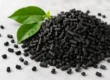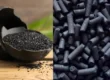


The food and beverage industries now require the purification of their products through eco-friendly methods that would guarantee quality, safe, and clean products. best activated carbon for food & beverage filtration Carbon is used to a large extent in the extraction of impurities, odors, colors, and chemical deposits by natural processes. Its effectiveness, safety, and sustainability make it the solution of choice in the purification of modern food and beverage production plants.
Understanding Eco-Friendly Purification for Food & Beverage
Ensures chemical-free and natural purification
Maintains product taste, quality, and safety
Reduces environmental impact with sustainable filtration choices
Why Activated Carbon Is the Best Choice
Food and beverage activated carbon filtration has everybody believing in its capability due to its extra incredible adsorption ability. It eliminates toxins, undesired colors, smells, and organic substances without impacting taste. It is made of natural resources such as the coconut shells, which helps in purifying food and beverage industries in a way that is eco-friendly. It is economical, efficient, and very in line with regulatory food-grade standards.
How Activated Carbon Purification Works
Adsorption is the principle in which the contaminants are adsorbed to the pores with the activated carbon principle. It captures chemicals, VOCs, chlorine, and undesirable by-products using its micro- and mesopores. The activated carbon employed in food production is manufactured in a controlled environment that ensures that their purity and safety are ensured. When applied in the filtration systems, it is naturally purified in the form of a chemical-free substance, which can be applied in beverages, oils, and sweeteners, among others. It is the most environmentally friendly option, as it is convenient and can be serviced due to its simplicity in the purification of food and beverage up to its processing.
Types & Uses of Activated Carbon in Food & Beverage
|
Type of Activated Carbon |
Source |
Primary use |
|
Powdered Activated Carbon |
Coconut Shell |
Beverage purification, color removal |
|
Granular Activated Carbon |
Wood or Coal |
Water Purification in food plants |
|
Food-Grade Carbon |
Coconut shell |
Sugar purification, edible oil processing |
|
Steam-Activated Carbon |
Natural biomass |
Organic compound removal |
Advantages:
Filtration using natural or chemical means.
Enhances taste, color, and transparency.
Green and environmentally friendly.
Cost-effective purification
Removes VOCs, organic and smell contaminants.
Difference Between Traditional Purification and Activated Carbon Purification
|
Traditional Purification |
Activated Carbon Purification |
|
Chemical-based |
Completely natural process |
|
High operational Cost |
Cost-effective |
|
May affect taste |
Preserves flavor |
|
Limited impurity removal |
High adsorption efficiency |
Applications:
Beverage purification (juice, soft drinks, alcohol)
Edible oil refining
Sugar syrup purification
Food-grade water treatment
Color and odor removal
VOC and chemical residue elimination
Conclusion
Eco-friendly purification for food & beverage filtration through activated carbon is the surest, most sustainable, and strongest method to be used in contemporary businesses. Its capacity to promote environmentally friendly food and beverage processing purification makes it safe, pure, and environmentally conscious.
Looking for Eco-Friendly Purification? Explore High-Quality Activated Carbon