
In many places, air problems are not caused by dust. They are caused by gases. Chemical vapours, solvent fumes, exhaust smells, and volatile organic compounds stay in the air even when particle filters are used. This is where gas phase filtration becomes necessary.
Activated carbon is commonly used in gas phase filtration because it can capture these gases directly from the air stream.
Why Particle Filters Are Not Enough
Standard air filters are designed to stop solid particles. They work well for dust, pollen, and smoke particles, but they do not remove gases. Gases pass straight through them.
Industries face this issue in places like production floors, chemical handling areas, HVAC systems, and enclosed workspaces. Even if the air looks clean, harmful or unpleasant gases can still be present.
Activated carbon is used because it can remove these gases rather than just letting them pass through.
How Activated Carbon Removes Gases
Activated carbon has a porous internal structure. When air flows through it, gas molecules attach themselves to the surface of the carbon. This process continues until the carbon reaches its capacity.
The air that exits the system contains fewer chemical vapours and reduced odour levels. No chemical reactions are required. The process depends on contact time and the type of carbon used.
Once the carbon becomes saturated, it must be replaced or regenerated to maintain performance.
Common Uses of Gas Phase Filtration
Gas phase activated carbon filters are used in many environments where air quality matters.
-
- Industrial exhaust systems use it to reduce emissions before air is released.
-
- HVAC systems use it to improve indoor air quality.
-
- Laboratories and chemical plants use it to control fumes.
-
- Printing and packaging units use it to reduce solvent smells.
-
- Waste handling and food processing areas use it to control odours.
Anywhere gases are produced, this type of filtration is relevant.
Types of Activated Carbon Used
Different applications require different carbon forms.
-
- Granular activated carbon is used where airflow is steady and space is available.
-
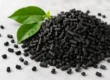
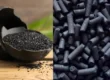
- Pelletized carbon is chosen for systems that need higher strength and durability.
-
- Impregnated carbon is used when specific gases need better control.
The selection depends on the gas type, airflow rate, and system design.
Maintenance and Replacement
Activated carbon does not clean itself. Over time, it fills up with captured gases. If it is not replaced on time, performance drops. Replacement frequency depends on how much contamination is present and how long the system operates each day. Regular monitoring helps avoid sudden loss of filtration efficiency.
Why Gas Phase Filtration Is Used Long-Term
Gas phase filtration with activated carbon is used because it is predictable. It does not require complex operation or constant adjustment. Once the correct carbon and system are in place, it works steadily.
For facilities that deal with chemical vapours, odours, or VOCs, this method provides a practical way to keep air quality under control.
Final Thoughts
Gas phase filtration is not about making air look clean. It is about reducing gases that cannot be seen but can still cause problems. Activated carbon helps manage this quietly and effectively, which is why it continues to be used across many industries.