

Walk into any modern food processing facility and you’ll notice something interesting clarity matters. Whether it’s the color of sugar syrup, the taste of bottled beverages, or the purity of edible oils, even small impurities can affect quality and consumer trust. That’s where activated carbon filtration food industry practices quietly do their job.
Activated carbon has been used for centuries, but in today’s food industry, it has become far more refined and specialized. It’s no longer just about basic filtration it’s about precision. Manufacturers rely on it to remove unwanted color, eliminate off-flavors, and strip out trace contaminants without damaging the final product.
This article takes a closer look at how activated carbon filtration works in food processing, where it’s used, and why it continues to be one of the most trusted purification methods.
Understanding Activated Carbon Filtration in Food Processing
At its core, ecogreen activated carbon filtration is a process that uses highly porous carbon material to trap impurities. These pores create a massive surface area, allowing the carbon to adsorb unwanted substances from liquids and gases.
In the food industry, this process is carefully controlled. The goal isn’t just to remove contaminants it’s to do so without affecting the essential qualities of the product, like taste, aroma, or nutritional value.
Activated carbon used in food applications is typically derived from natural sources such as coconut shells, wood, or coal. Through thermal activation often using steam the material develops a network of microscopic pores. These pores act like tiny sponges, capturing molecules responsible for color, odor, and chemical impurities.
What makes this method especially useful is its selectivity. It can remove undesirable compounds while leaving beneficial components largely untouched.
Why the Food Industry Relies on Activated Carbon
Food processing is a delicate balance. Producers need to meet strict safety standards while maintaining consistent quality across large volumes. Activated carbon filtration offers a reliable way to achieve both. One of the main reasons it’s widely used is its versatility. The same material can be applied across different products from liquids like juices and syrups to semi-solid substances like oils.
Another key advantage is its efficiency. Activated carbon works quickly, especially in powdered form, making it suitable for large-scale operations where time and throughput matter.
There’s also a safety aspect. Activated carbon helps remove trace contaminants such as pesticide residues, heavy metals, and unwanted organic compounds. This supports compliance with food safety regulations and reduces the risk of product recalls.
Key Applications in the Food Industry
Decolorization of Sugar and Sweeteners
One of the most common uses of activated carbon is in sugar refining. Raw sugar solutions often contain color bodies that need to be removed to achieve a clear, white product. Activated carbon binds with these color molecules and removes them efficiently. The result is a cleaner, more visually appealing product without altering sweetness or composition.
Beverage Clarification
In the beverage industry, clarity and taste are everything. Activated carbon is used to remove haze-forming compounds, unwanted pigments, and off-flavors from products like fruit juices, soft drinks, and alcoholic beverages. For example, in juice processing, it helps eliminate natural compounds that may cause bitterness while preserving the fruit’s intended flavor profile.
Edible Oil Purification
Vegetable oils often contain impurities such as pigments, oxidation products, and trace metals. Activated carbon filtration helps refine these oils, improving both appearance and shelf life. It’s particularly useful in removing polycyclic aromatic hydrocarbons (PAHs), which can form during processing and must be minimized for safety reasons.
Removal of Odor and Taste Compounds
Some raw materials carry strong or undesirable odors that can affect the final product. Activated carbon adsorbs these volatile compounds, resulting in a cleaner, more neutral base. This is especially important in products where subtle flavors matter, such as dairy alternatives or specialty beverages.
Types of Activated Carbon Used
Not all activated carbon is the same. In the food industry, the choice depends on the application. Powdered Activated Carbon (PAC) is widely used for liquid purification. Its fine particle size allows for rapid adsorption and effective contact with impurities.
Granular Activated Carbon (GAC), on the other hand, is used in filtration systems where liquids pass through a fixed bed of carbon. It’s commonly found in continuous processing setups. Steam-activated carbon is often preferred for food applications because it avoids chemical residues and produces a cleaner end product.
How the Filtration Process Works
The process itself is straightforward but requires careful control.
First, activated carbon is introduced into the liquid or used in a filtration column. As the liquid comes into contact with the carbon, impurities are adsorbed onto its surface. After sufficient contact time, the carbon is removed either by filtration or sedimentation. The treated liquid is then further processed or packaged.
The effectiveness of this process depends on several factors, including contact time, temperature, pH levels, and the type of carbon used. Small adjustments can significantly impact results, which is why process optimization is crucial.
Benefits Beyond Purification
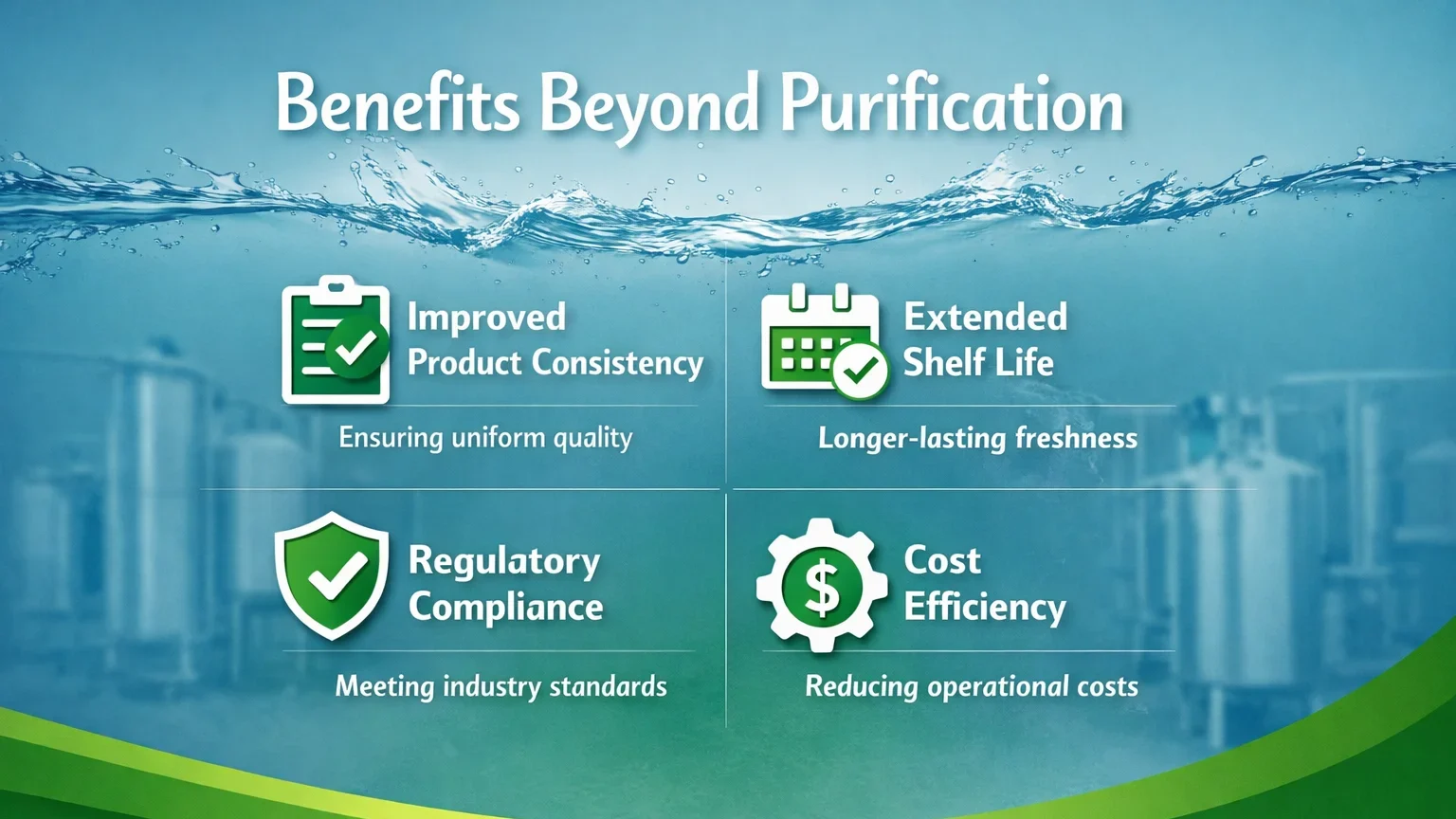
Improved Product Consistency
Consistency is a major concern in food manufacturing. Activated carbon helps standardize color, taste, and clarity across batches, ensuring that consumers get the same experience every time.
Extended Shelf Life
By removing reactive compounds and impurities, activated carbon can slow down degradation processes. This leads to longer shelf life and reduced waste.
Regulatory Compliance
Food safety regulations are becoming stricter worldwide. Activated carbon filtration helps manufacturers meet these requirements by reducing harmful substances to acceptable levels.
Cost Efficiency
While there is an upfront cost, the long-term benefits reduced waste, fewer recalls, and improved product quality often outweigh the investment.
Challenges and Considerations
Despite its advantages, activated carbon filtration isn’t without challenges. One issue is over-filtration. If not carefully controlled, the process can remove desirable components, affecting flavor or nutritional value. Another consideration is carbon disposal. Used carbon contains adsorbed contaminants and must be handled properly to avoid environmental issues.
There’s also the need for process optimization. Different products require different carbon types and operating conditions, which means manufacturers must invest time in testing and calibration.
Emerging Trends in Activated Carbon Filtration
The food industry is constantly evolving, and so is filtration technology. One emerging trend is the use of tailored activated carbon. These are engineered to target specific contaminants, improving efficiency and reducing waste.
Sustainability is another focus area. Manufacturers are exploring renewable raw materials and regeneration techniques to reduce environmental impact. Automation and real-time monitoring are also becoming more common, allowing for better control and consistency in filtration processes.
Conclusion
Activated carbon filtration has earned its place as a quiet but essential part of the food industry. It doesn’t draw attention, but its impact is everywhere from the clarity of a beverage to the purity of cooking oil.
What makes it stand out is its balance of simplicity and effectiveness. It solves complex purification challenges without overcomplicating the process. For manufacturers, it offers control, consistency, and confidence in product quality.
As food standards continue to rise and consumers become more discerning, the role of activated carbon filtration will only grow. Not as a trend, but as a reliable foundation for cleaner, safer, and better food production.